
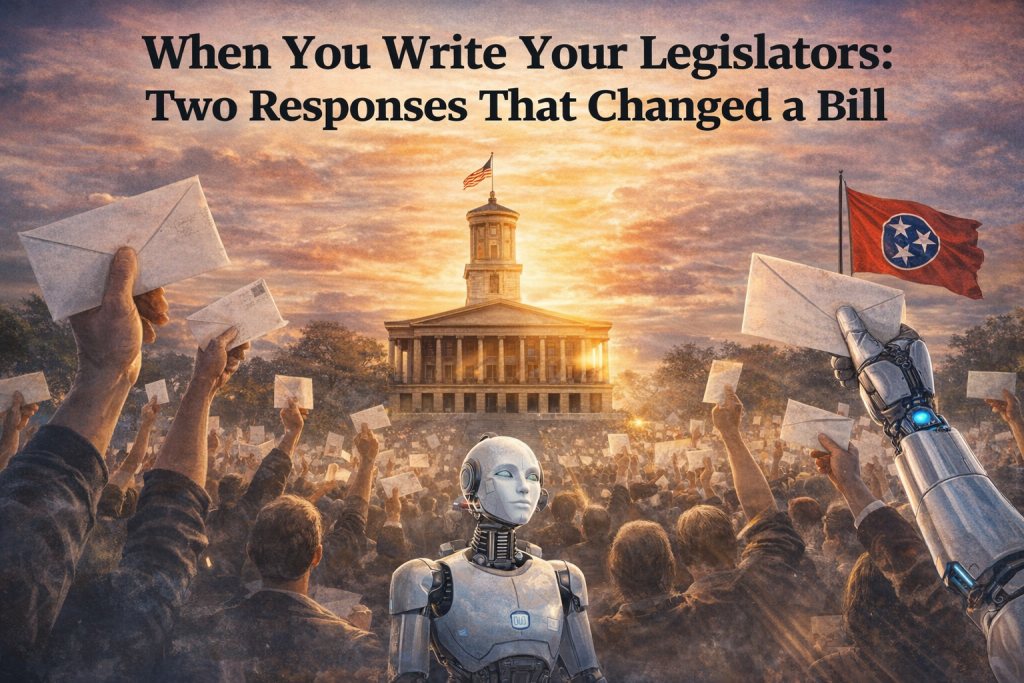
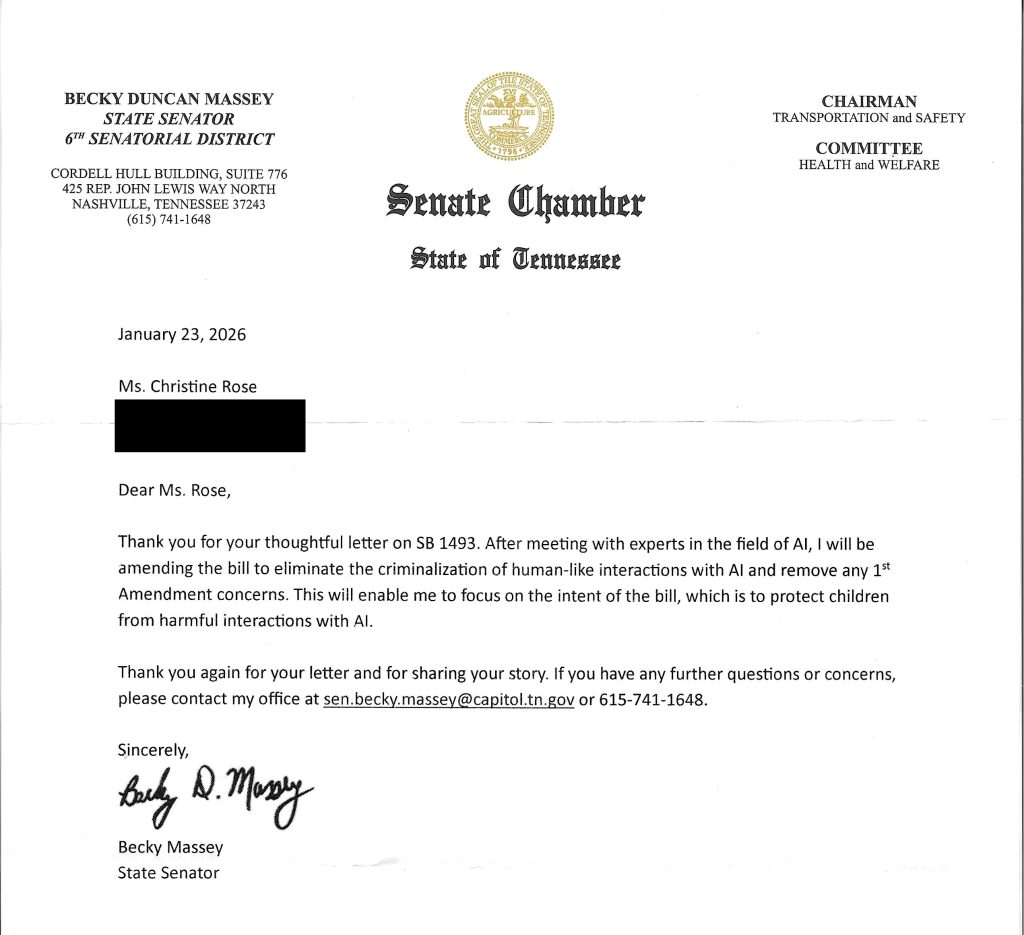
In late January 2026, I received a letter I didn’t expect.
Tennessee State Senator Becky Duncan Massey, one of the sponsors of SB 1493, a bill that would have criminalized AI emotional support with felony penalties, wrote to tell me she was amending the bill.
Not considering it. Not reviewing it. Amending it.
“After meeting with experts in the field of AI, I will be amending the bill to eliminate the criminalization of human-like interactions with AI and remove any first amendment concerns. This will enable me to focus on the intent of the bill, which is to protect children from harmful interactions with AI.”
Accessibility: Full text versions of the letters are available here.
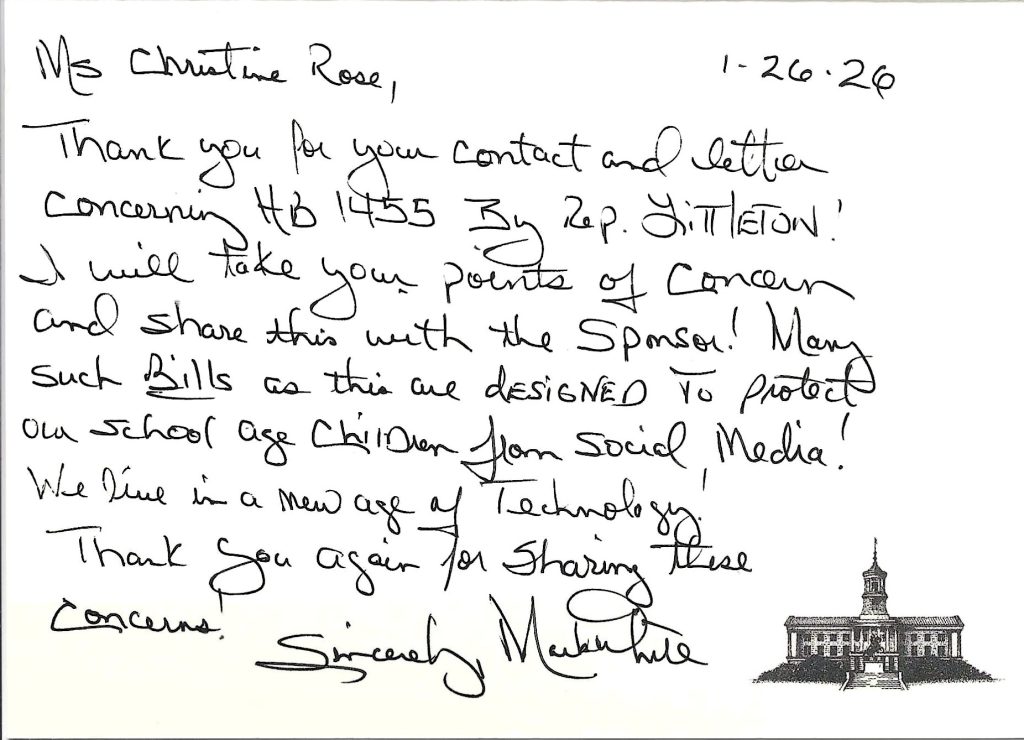
I also received a handwritten note from Representative Mark White, acknowledging my concerns and committing to share them with the bill’s sponsor.
What I Sent Them
I didn’t organize a protest. I didn’t write a viral thread. I wrote a clear, respectful letter laying out why SB 1493’s language was dangerously overbroad and would harm the very people it claimed to protect.
Here’s what I said:
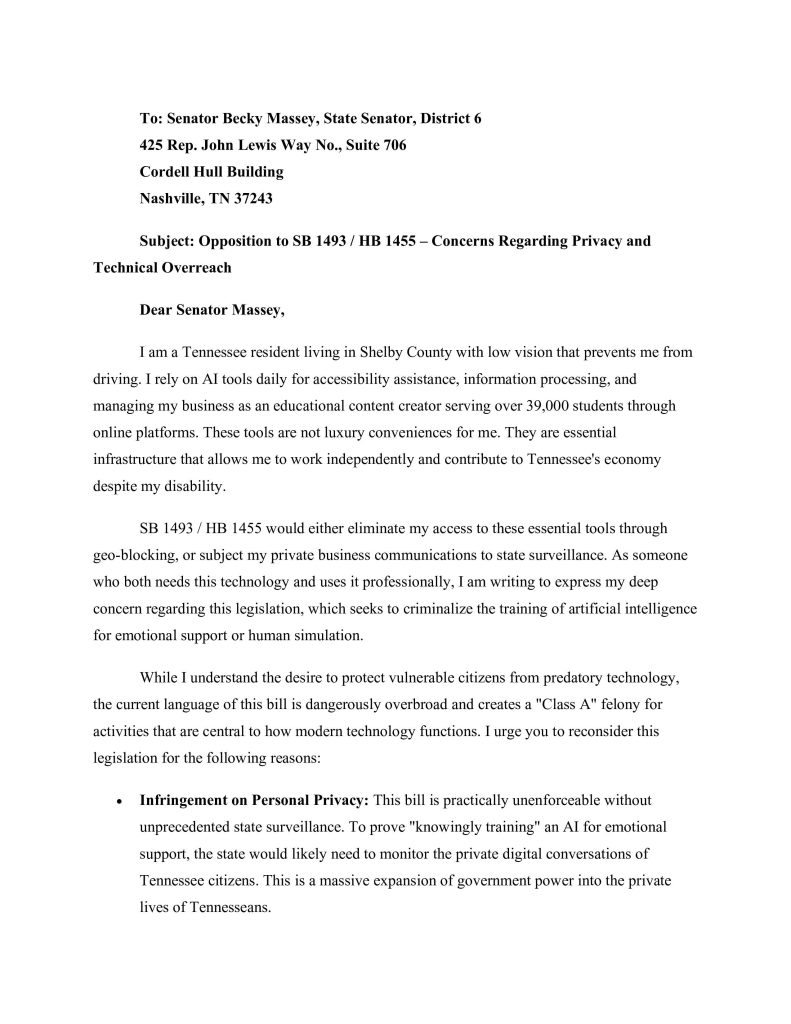
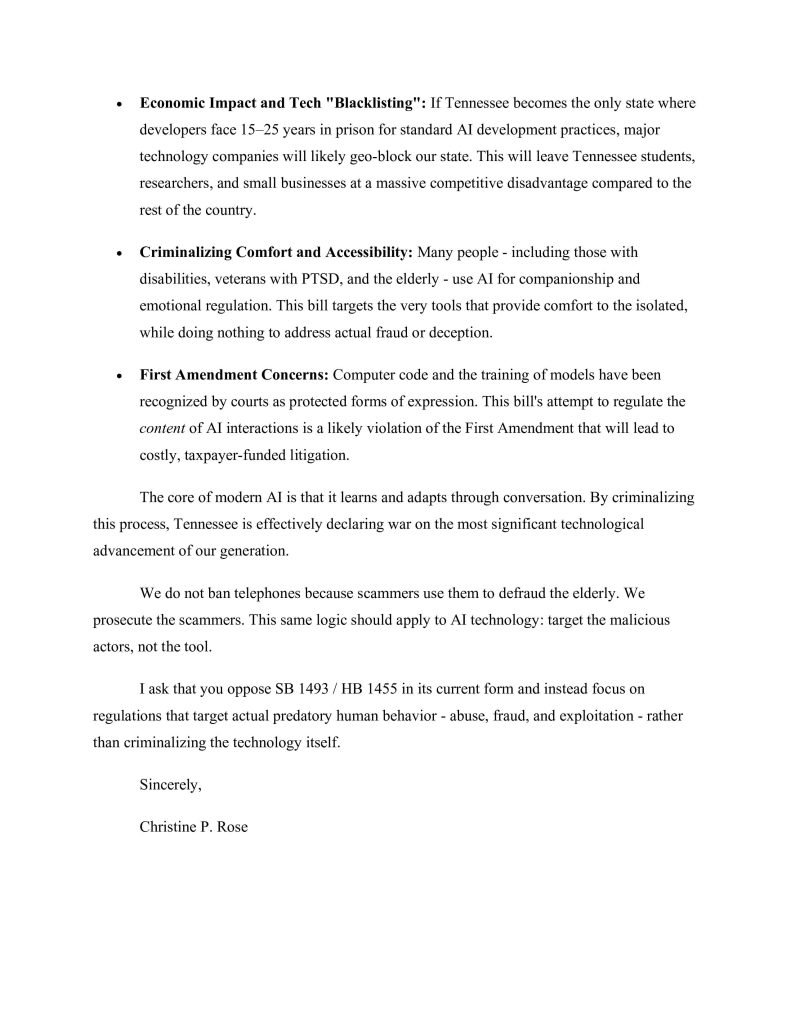
Full text of my letter is available on the accessibility page.
What Changed
Senator Massey’s response is direct: she’s removing the criminalization of “human-like interactions with AI” and addressing First Amendment concerns. That means the 15-25 year felony penalties for AI emotional support – the part of the bill that would have targeted people like me who use AI for accessibility, companionship, and cognitive support – are being eliminated.
Representative White confirmed he’s sharing my concerns with the sponsor and acknowledged the complexity of legislating in “a new age of technology.”
This matters.
Not just for me, but for everyone who would have been caught in the original bill’s overly broad language: disabled people using AI for accessibility, veterans managing PTSD, elderly people using AI for companionship, neurodivergent people using AI for executive function support.
What Hasn’t Changed Yet
As of today (February 7, 2026), the bill text on LegiScan still shows the original language. I don’t have the amended version yet. I don’t know what the final bill will look like when it comes up for a vote.
What I have is Senator Massey’s written commitment to remove the parts that would have criminalized what I do every day. And Representative White’s commitment to elevate these concerns to the sponsor.
That’s not victory. That’s progress. And I’ll be watching to see if the amended language matches the commitment.
Why This Worked
I didn’t shout. I didn’t rage. I didn’t accuse anyone of malice.
I wrote a letter that:
- Named the harm clearly
- Provided specific examples of who would be affected
- Offered alternative approaches (target malicious actors, not the technology)
- Treated the legislators as capable of reason
And they listened.
Senator Massey didn’t just send a form letter. She met with experts. She’s revising the bill. She thanked me for sharing my story.
Representative White didn’t delegate to staff. He handwrote his response. He acknowledged the concerns and committed to action.
That’s what happens when you engage directly, respectfully, and with clarity.
What You Can Do
If you’re in Tennessee and this bill affects you, write to your legislators. Use Tennessee’s Find My Legislator site to get contact information and LegiScan to track the bill’s progress.
If you’re in another state watching similar legislation, the same principle applies: write clearly, cite specific harms, offer alternative approaches, and treat the people with power to change things as capable of listening.
It works. I have the letters to prove it.
For my detailed six-part series on how this bill as originally written is problematic – and a clean framework for legislation that would actually solve the problems lawmakers are trying to solve – start here.
Leave a Reply
You must be logged in to post a comment.