
How DHS Administrative Subpoenas Threaten the Foundation of Free Speech
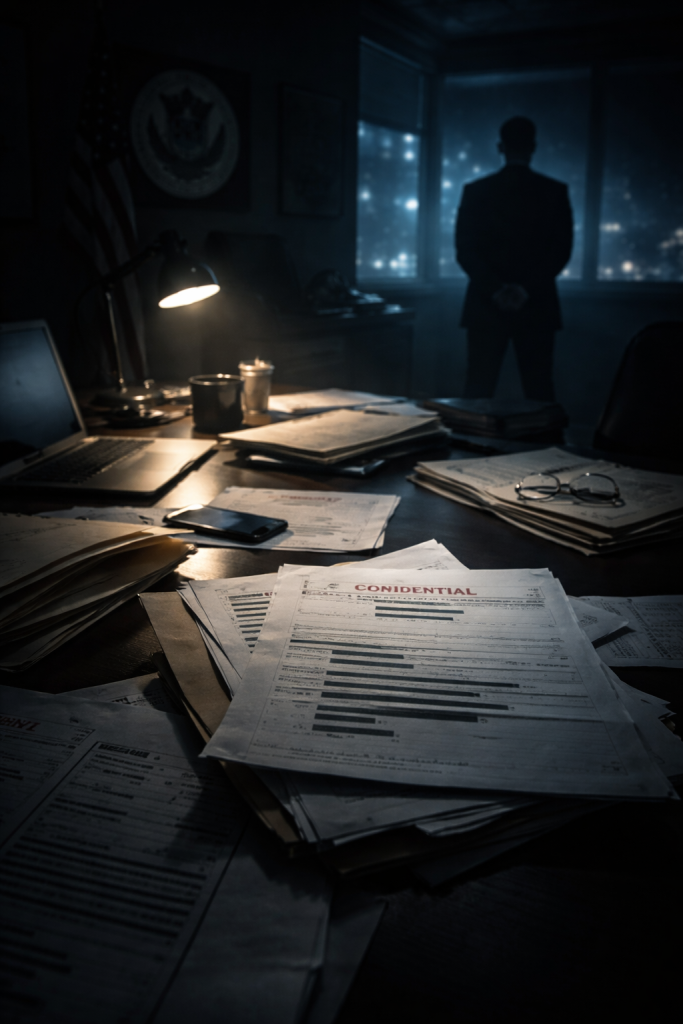
There are moments when a government crosses a line so quietly that most people never notice it. Not because the act is subtle, but because the mechanism is bureaucratic, buried under acronyms and administrative jargon. The early signs of erosion usually don’t look like crisis points; they look like paperwork.
That’s what the Electronic Frontier Foundation revealed in a February 10 open letter to tech companies: a set of administrative subpoenas issued by the Department of Homeland Security (DHS) that were used to demand the personal information of individuals engaged in protected political speech. These were critics of DHS, people documenting immigration enforcement, online voices the agency simply didn’t like.
EFF’s warning was unmistakable: the government is unmasking its critics in secret, without judicial oversight.
This isn’t partisan. It isn’t abstract. And it absolutely isn’t something we can afford to wave away. Because when a government gains the ability to identify dissenters without a judge, without cause, and without accountability, the slope toward retaliation becomes the architectural blueprint for suppression.
This is what a First Amendment crisis looks like at the beginning.
I. What DHS Is Actually Doing
EFF’s open letter to major tech companies lays out the mechanism in plain language. DHS has been issuing administrative subpoenas — not warrants — demanding user data, with no judge, no probable cause, and no meaningful oversight. These subpoenas have been used to target individuals engaged in political speech. When challenged, DHS often withdraws rather than defend them in court. Companies typically issue the data unless they choose to fight back. Users are frequently never notified, meaning they have no chance to contest the demand.
Put simply, DHS is exploiting a loophole: a non-judicial power originally intended for immigration and customs enforcement, now redeployed to unmask people whose “crime” is criticizing the government, not immigration or customs-related.
And here’s the kicker: because the subpoena is directed to a third party — your website host, your ISP, your cloud provider, your email service — you never know it happened. Your identity could be pulled out from behind your speech in a conference room somewhere, and you would be none the wiser.
This is not an exaggeration. It’s happening.
II. Why This Is a Direct Strike at the Core of the First Amendment
Free speech protections in this country are not limited to the right to say words. They also encompass the right to speak without being identified, because identity is the single most powerful lever for silencing dissent. The ACLU flagged this as far back as December 2023. But the principle itself is bedrock, not new law.
Talley v. California (1960) struck down a law requiring political pamphlets to list the author’s name, holding that anonymity is a vital shield against retaliation. McIntyre v. Ohio Elections Commission (1995) reaffirmed that anonymous political speech is not a loophole — it is an honorable tradition of advocacy and dissent, central to democratic discourse. Modern courts have extended that protection online, requiring evidence and judicial review before unmasking speakers.
The legal principle is consistent across decades: a government cannot identify political speakers unless it satisfies the highest constitutional scrutiny.
DHS administrative subpoenas bypass that entirely. No judge. No evidentiary standard. No opportunity for the speaker to object. No transparency. No accountability. The government simply decides it wants your name and gets it. This is a line we are actively watching being crossed.
III. We Know Exactly Where This Leads Because America Has Been Here Before
When agencies acquire unreviewable surveillance powers, history tells us who they target first: critics, activists, journalists, dissidents.
This pattern is not speculative. It is documented.
COINTELPRO were FBI programs that surveilled, infiltrated, and disrupted civil rights leaders, anti-war activists, and political organizers. The McCarthy Era saw government unmasking of suspected subversives leading to blacklists, ruined careers, and widespread self-censorship. Post-9/11 warrantless NSA surveillance swept up Americans’ communications without warrants for years.
Every one of these involved the same structural flaw: surveillance power with no external check, used against people exercising their constitutional rights.
DHS administrative subpoenas are not an anomaly. They are the newest iteration of an old pattern.
IV. And No, This Isn’t Only a US Problem
If you want to understand how dangerous this is, look at the modern governments that use administrative processes to unmask critics.
Turkey routinely demands PII (Personally Identifiable Information) from platforms to identify citizens who “insult the president.” India requires platforms to disclose the identities of users who criticize government policy. Russia uses Roskomnadzor to obtain PII from platforms and crack down on journalists and anti-war protesters. Hungary and Poland weaponize similar tools to silence independent media. China has industrialized the practice into a comprehensive system of political surveillance.
No reasonable person wants to believe the US would walk that path. But that path begins with a single architectural decision: the state gains the ability to identify critics in secret. We now have that architecture, and it is operational today.
V. Identification Is the First Step of Suppression
People often imagine authoritarianism starts with censorship or arrests. It doesn’t. It starts with identification.
Because once the state knows who its critics are, every other tactic becomes easier: intimidation, selective prosecution, immigration retaliation, employment pressure, targeted surveillance, public smearing, chilling ripple effects through entire communities.
You don’t need to arrest people to silence them. You just need them to know they are being watched. Unmasking is the lever that makes all other levers possible.
That is why anonymous political speech is so deeply protected, and why DHS’s misuse of administrative subpoenas is so fundamentally incompatible with a free society.
VI. Tech Companies Now Sit Between the State and the Constitution
EFF’s open letter is not a rhetorical stunt. It is a plea. Because the uncomfortable truth is this: right now, the only thing standing between DHS and the identities of political speakers is whether tech companies feel like resisting.
There is no judge. There is no hearing. There is no adversarial process. There is no requirement to notify users. If a company complies quietly, your identity is gone. If they resist, you might be protected but you’ll never know resistance happened. Or how close you came to becoming a political target simply because you exercised your First Amendment rights.
EFF’s demands are simple, reasonable, and constitutionally aligned: require a court order, notify users, and push back on gag orders. This shouldn’t be controversial. It should be basic civic hygiene.
VII. The Larger Pattern: Government Interference with Information Systems
When you zoom out, a coherent pattern emerges across recent events. They share the same DNA: a state actively working to control the informational machinery on which democratic legitimacy depends.
Anti-ESG laws distort how corporations are allowed to model risk. Imagine a bank legally prohibited from considering flood risk when deciding whether to finance construction in a flood zone. The information is real. The danger is real. But the state has decided that acting on it is impermissible.
DHS administrative subpoenas operate by the same logic, applied to speech: you have free expression, but only to the extent it doesn’t draw official attention.
In both cases the government is not merely regulating behavior. It is inserting itself into systems that require neutrality to function, penalizing the recognition of inconvenient realities, and making dissent — whether financial or political — structurally costly.
These are not isolated incidents. They are signals.
VIII. The Line We Cannot Allow to Be Crossed
A government that can unmask its critics in secret has already begun eroding the conditions that make free expression possible. DHS may not be arresting dissenters today, but history tells us that once the architecture exists, action eventually follows.
EFF raised the alarm because the window to stop this is open now and may not stay open long. What we’re watching is the quiet normalization of a government power that allows agencies to identify speakers, bypass courts, erase anonymity on command, and do all of it without leaving a public record.
The First Amendment does not merely protect what we say. It protects our ability to say it without fear — and that begins with the right to remain unknown.
If we lose that, the rest follows quickly. History has already shown us the blueprint. We are not at the end of that story yet. But we are in it.
What will we do?
Leave a Reply
You must be logged in to post a comment.